
Most wood pellet manufacturers source raw material from third-party sawmills, brokers, or open-market wood residue suppliers – a model that works, but one where quality and origin can vary from shipment to shipment depending on who a producer is buying from that week. Phu Tai’s wood pellet operation is built differently: its primary raw material comes from residue generated at the company’s own indoor and outdoor furniture manufacturing plants.
For a buyer, the appeal of a wood pellet supplier isn’t just the finished product spec sheet – it’s whether that spec sheet will still be accurate on the tenth shipment, and the hundredth. Raw material consistency is one of the biggest variables behind pellet quality drift over time: different wood species, different moisture content at intake, different levels of bark or contamination all affect the finished pellet’s ash content, calorific value, and durability.
When a producer sources from multiple third-party suppliers, some of that variability is difficult to fully control, even with good quality checks at intake. When a producer sources from its own manufacturing operations, the variability is reduced at the point of origin – because the same company controls the wood species, the processing method, and the handling of the residue from the moment it’s generated.
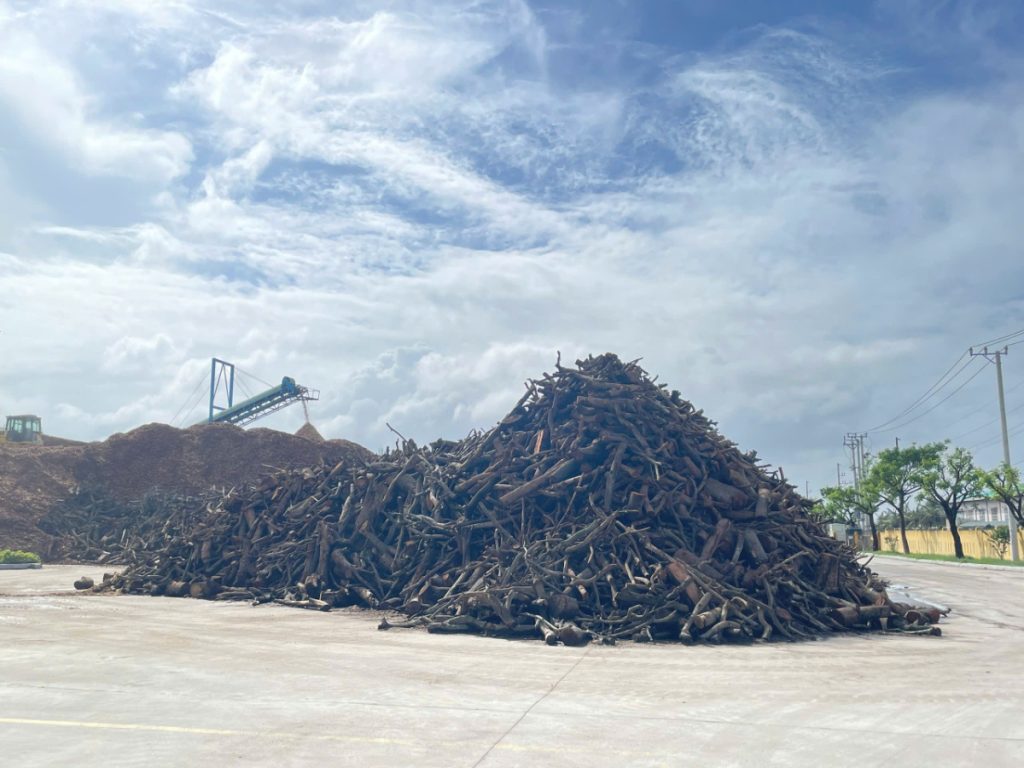
Phu Tai’s wood pellet raw material is sourced directly from wood residue generated at four of the company’s own indoor and outdoor furniture manufacturing plants. This residue – sawdust, offcuts, and shavings generated during furniture production – would otherwise need to be disposed of or sold off as low-value byproduct. Instead, it becomes the primary feedstock for wood pellet production.
This isn’t a new relationship the company had to build from scratch. Phu Tai has operated in wood manufacturing for over 20 years, meaning the furniture plants supplying pellet-grade residue are established, consistent operations – not new or unproven suppliers.
Alongside residue from its own plants, Phu Tai’s raw material base includes wood from its managed forest resources – approximately 8,700 hectares, of which 4,200 hectares are currently FSC certified, with additional area under assessment. This gives the company two complementary and traceable raw material streams, rather than relying on a single source or on open-market purchasing.
For a buyer, a closed-loop supply chain translates into a few concrete advantages:
This structure also reflects a broader positioning: Phu Tai’s biomass energy division isn’t a standalone startup chasing a new market opportunity. It’s an extension of infrastructure, forestry resources, and manufacturing discipline the company already built over two decades in stone and wood production.
Buyers interested in raw material sourcing details, production specifications, or a facility overview are welcome to explore our Factory Systems page or request a quotation directly.