
A wood pellet’s quality is determined less by any single step and more by how consistently every step in the line is controlled – moisture before pelletizing, particle size going into the press, cooling before screening. Here’s how raw material becomes a finished, export-ready pellet at Phu Tai’s plants.
Production begins with sustainably sourced biomass: by-products from Phu Tai’s managed forest resources – approximately 8,700 hectares, of which 4,200 hectares are FSC certified – combined with wood residue generated by the company’s own furniture manufacturing facilities. Raw material inputs include sawdust, wood chips, logs and twigs, and shavings, primarily from Acacia, Eucalyptus, and Pine species.
This mixed but controlled input stream is what allows the finished pellet to form without chemical binders later in the process – the natural lignin in the wood itself does that job, once the material has been properly dried, ground, and compressed.
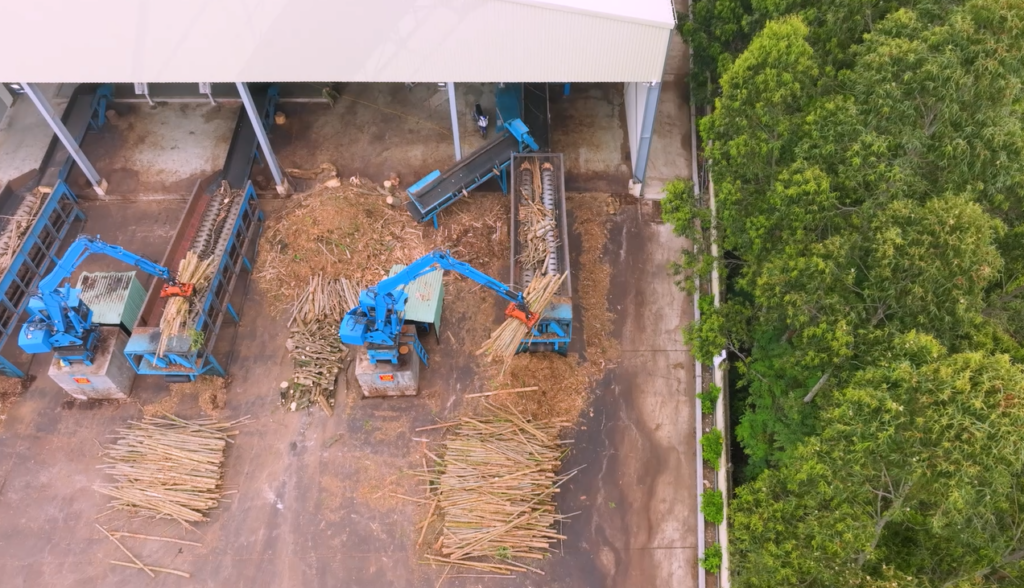
Incoming logs and wood residue first pass through debarking, where outer bark is mechanically removed. Bark carries higher ash and mineral content than the wood beneath it, so removing it early keeps raw material cleaner heading into processing – resulting in pellets with lower ash content and more consistent combustion performance downstream.
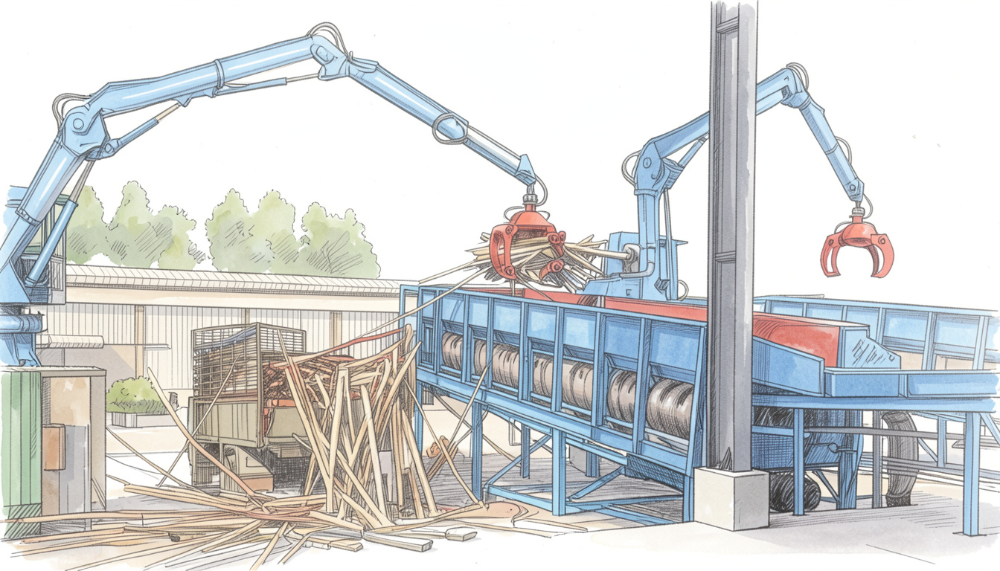
Debarked wood is fed into the coarse crusher, breaking larger pieces down into smaller, more uniform fragments. This intermediate reduction stage prepares the material for drying and ensures a consistent particle size before the next stage, improving efficiency at every step that follows.
Crushed wood material passes through a rotary drying drum, where moisture content is reduced to the precise level required for pelletizing – typically below 12%. This stage is one of the most critical in the entire line: material that’s too wet won’t bind properly under pressure, while material that’s too dry can produce brittle, low-density pellets that break apart during handling.
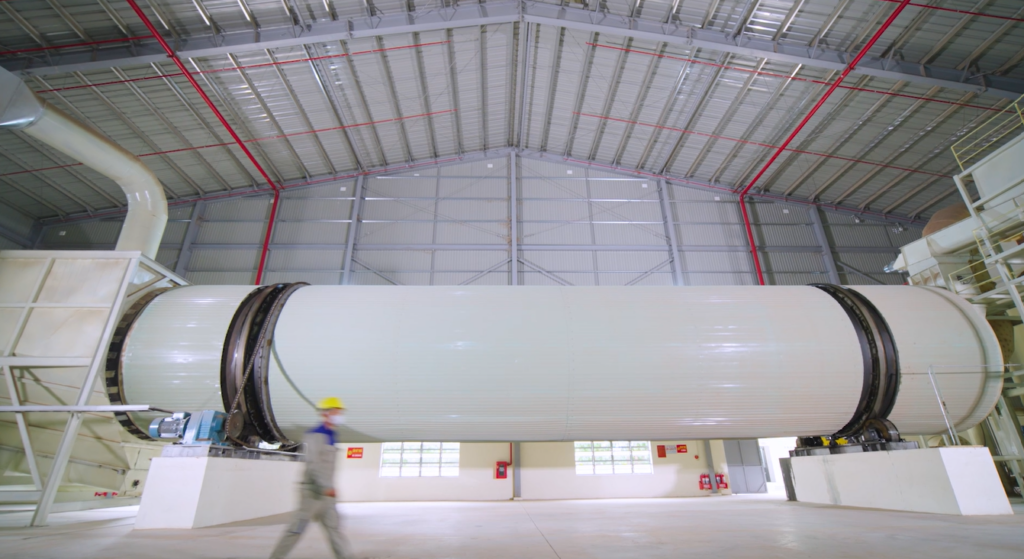
Dried material moves to the hammer mill, where high-speed hammers pulverize the wood into fine, uniform particles. This fine grind is essential for producing dense, consistent pellets – larger or uneven particles would result in weaker pellets prone to breaking apart during transport.
Fine wood particles are fed into the pellet mill, compressed under high pressure and forced through a die to form dense, cylindrical pellets. The heat generated during compression softens the natural lignin in the wood, which acts as a binding agent – allowing pellets to hold their shape with no added chemicals.
Freshly formed pellets emerge from the pellet mill warm and slightly soft. A controlled cooling stage brings them down to ambient temperature, fully hardening the lignin binder and giving pellets their final structural strength before screening.
Cooled pellets pass through a screening process that removes fine dust, fragments, and oversized or malformed pellets. This step ensures only pellets meeting consistent size and quality standards move forward – a key factor in reliable combustion performance for end users.
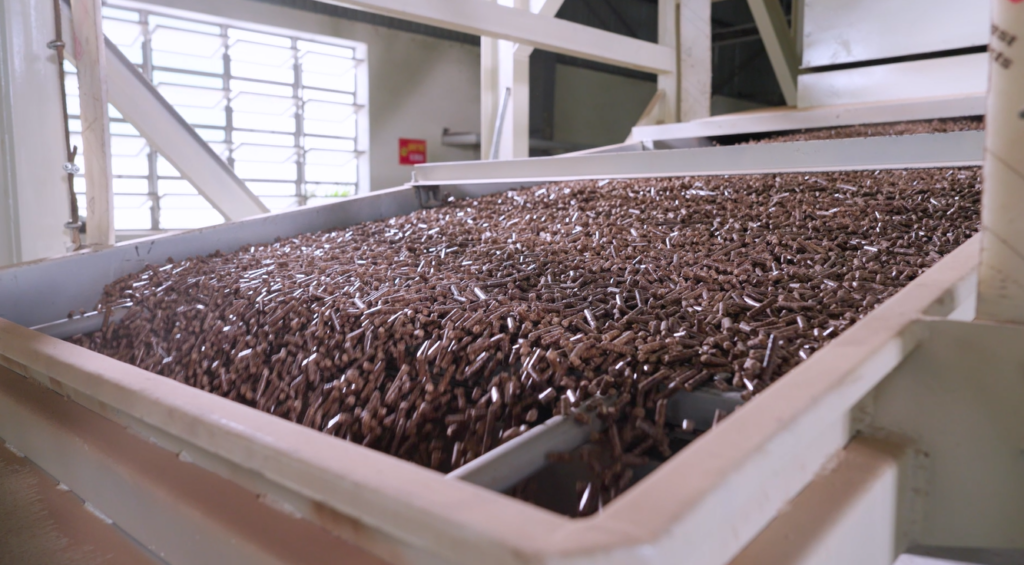
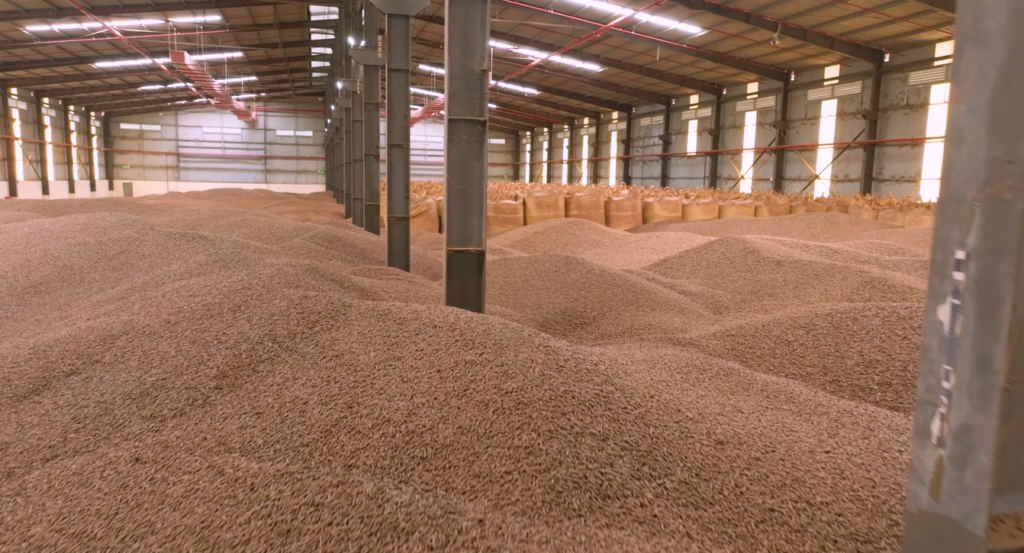
Finished pellets are directed either to bulk storage silos for large-volume shipments or to automated bagging lines for packaged distribution. Both storage methods are designed to protect pellets from moisture exposure, preserving quality until the point of loading and shipment.
Two producers can list similar specifications on paper – moisture content, calorific value, durability – and still deliver noticeably different consistency over a long-term contract. That consistency comes from process control at every one of these nine stages, not just from a passing lab test on a sample batch.
Buyers interested in a facility overview, production capacity, or current specifications are welcome to explore our Factory Systems page or request a quotation directly.