
As biomass power generation has scaled up across Europe and Asia, a second certification has become increasingly common alongside FSC in wood pellet supply contracts: SBP, the Sustainable Biomass Program. For buyers newer to sourcing industrial biomass, it’s worth understanding what SBP actually confirms — and how it differs from forest certifications like FSC.
SBP was established by major biomass energy producers to give buyers of woody biomass – primarily wood pellets and wood chips used in industrial-scale power generation – a standardized way to verify that the material they’re purchasing is legally and sustainably sourced. Unlike FSC, which certifies management practices at the level of an individual forest, SBP certification is applied at the level of the biomass producer: the pellet mill or trading company itself.
In practice, this means SBP looks at how a producer sources, tracks, and processes its raw material across its full supply base – including feedstock that may come from multiple forest sources, not just a single certified forest unit. For producers that source certified forest material, FSC and SBP requirements are designed to work alongside each other rather than as separate hurdles to clear independently.
An SBP-certified producer must be able to demonstrate that:
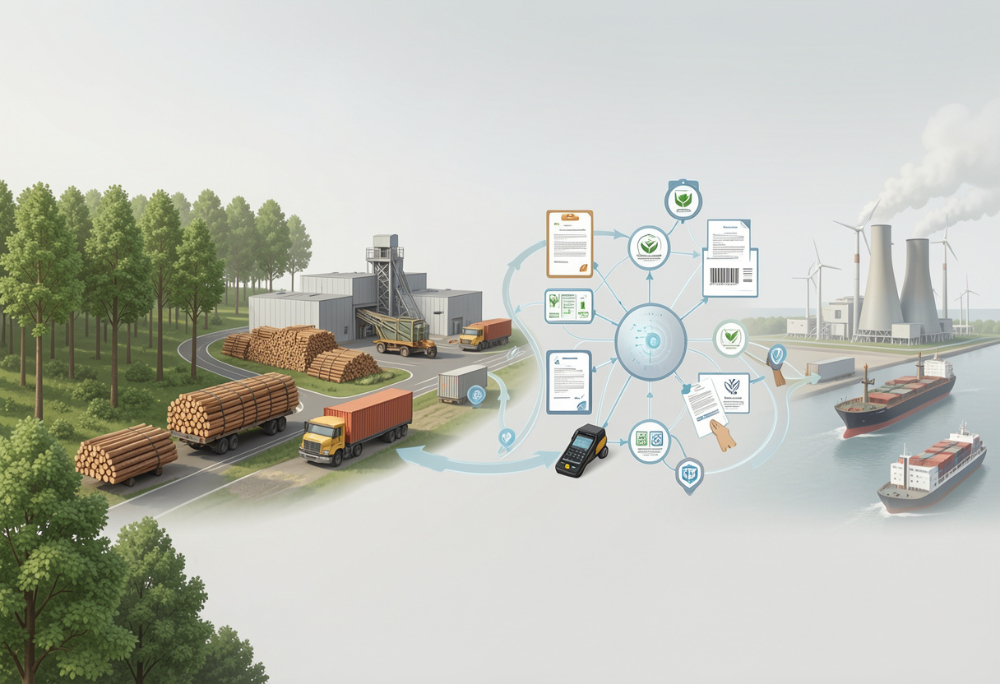
For energy buyers, this data matters beyond simple compliance. Verified sourcing and processing data allows a buyer to calculate the carbon and energy profile of the biomass it purchases – information that increasingly feeds into national reporting requirements for renewable energy and emissions reduction.
For a biomass power plant operator, sourcing uncertified material creates a documentation gap that can be difficult to resolve after the fact – particularly if that data is needed for regulatory reporting or subsidy eligibility. SBP certification gives buyers a standardized way to close that gap before a contract is signed, rather than requesting ad hoc documentation from each individual supplier.
This is part of why SBP has moved from a Europe-specific requirement toward a broader expectation across biomass-importing markets, including parts of Asia.
Phu Tai’s wood pellet operations currently hold FSC Chain of Custody certification, and the company is in the process of completing SBP assessment, expected to be finalized in September 2026. This builds on a raw material base that already includes FSC-certified forest land and wood residue tracked through Phu Tai’s own manufacturing operations – the same traceability foundation that SBP’s supply base evaluation is designed to verify.

For trading houses and industrial buyers planning procurement timelines that require SBP-certified supply, we’re happy to discuss current certification status and expected completion directly. Contact our team or request a quotation to start the conversation.